This section focuses on the intersectionality of undocumented immigrants with disabilities.
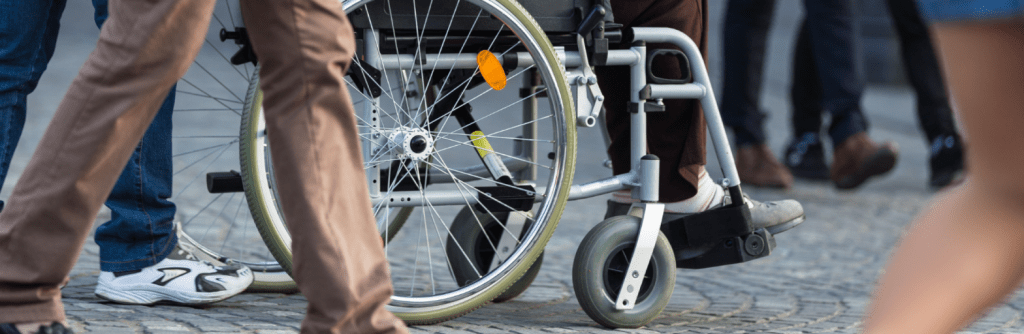
Undocumented individuals with disabilities experience a unique form of intersectionality, where their challenges are compounded by both their immigration status and disability. This dual marginalization can result in heightened social, economic, and healthcare disparities. They often face barriers to accessing essential services, such as healthcare, social support, and disability accommodations, due to their lack of legal status. Additionally, undocumented individuals with disabilities are at an increased risk of exploitation and abuse, as they may be reluctant to seek help due to fear of deportation or legal repercussions.
The intersection of disability and undocumented status also affects their ability to secure stable employment, housing, and legal protections, further isolating them from society. Moreover, navigating systems that are already difficult for disabled individuals—such as healthcare and social services—becomes even more challenging without legal documentation, leaving many without the necessary support for both their disability and immigration-related needs. Addressing the needs of undocumented individuals with disabilities requires a comprehensive approach that acknowledges the compounded nature of their struggles and ensures access to both immigration relief and disability rights.
statistics
Among immigrant adults ages 18 to 64 in the U.S., 5.6% report having a disability, and 2.3% have multiple disabilities. The most common types include difficulty walking (2.7%), cognitive challenges (1.9%), and trouble living independently (1.8%).
Disability rates vary across groups, with 10.2% of nonelderly Black Latinx immigrants reporting a disability—the highest among the groups studied—followed by non-Latinx Pacific Islanders (7.3%). Non-Latinx Asian immigrants reported the lowest rate at 4.2%. About one-third (35.3%) of immigrants with disabilities have limited English proficiency.
Mexican-born immigrants make up the largest share (30.7%) of immigrants with disabilities, reflecting broader immigration trends. Nearly half (49.3%) of nonelderly immigrants with disabilities live on low incomes, and about 41.4% are employed. Of those working, 30% are in service jobs like cleaning or caregiving, industries where immigrant workers are common.
Only 12.7% of immigrants with disabilities reported receiving Supplemental Security Income (SSI) in the previous year. Health insurance access also varies: 30.3% of noncitizen immigrants are uninsured compared to 9.5% of naturalized citizens. Overall, 18.8% of immigrants with disabilities lacked health coverage at the time of the survey.
Resources
national disability rights network
The National Disability Rights Network (NDRN) is a key resource for people with disabilities, including immigrants and undocumented individuals. As the nonprofit membership organization for the federally mandated Protection and Advocacy (P&A) Systems and Client Assistance Programs (CAP), NDRN supports a network of agencies in every U.S. state and territory—plus a dedicated agency serving Native American communities in the Four Corners region.
Together, the P&A/CAP network is the largest provider of legally based advocacy services for people with disabilities in the United States, offering critical support on issues like discrimination, access to healthcare, education, housing, and more. This resource plays a vital role in protecting the rights of individuals with disabilities, including those navigating the added challenges of immigration status.
 UNDOCUNIFIED