MOST UPDATED EXECUTIVE ORDERS AS OF THE RECENT PRESIDENTIAL INAUGURATION
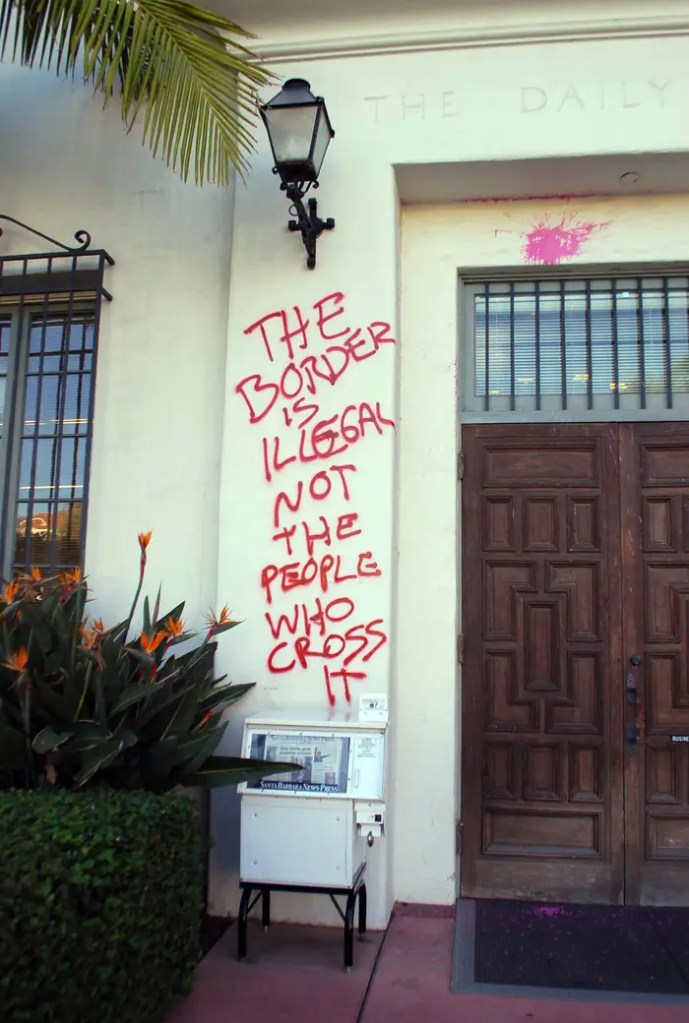
This section focuses on recent immigration policies implemented in the United States, exposing how these changes reflect a system that continues to marginalize immigrant communities, especially those who are undocumented. From heightened border enforcement to shifts in asylum rules and attempts to dismantle long-standing protections, this will break down the latest legal developments and executive actions with a critical lens. The goal is not just to inform, but to challenge the narratives that criminalize migration and to hold policymakers accountable for the harm these policies inflict.
This will center the voices and experiences of undocumented people, examining how these laws impact their safety, dignity, and rights. Whether it’s the threat of detention and deportation, barriers to healthcare and education, or the emotional toll of living in fear, this section will highlight the real human consequences of policy decisions. By amplifying grassroots resistance and community-led solutions, I hope to inspire action, solidarity, and collective efforts to build a more just and humane immigration system.
Summary:
- This order directs DHS and Department of State to implement stricter “enhanced vetting” for visa applicants and those already in the country.
- The order directs all agencies to be thorough in vetting during visa issuing process.
Potential impact:
Due to the inter-agency nature of the Order, it is likely more Requests for Evidence (“RFE”) and denials will be issued for filings made with U.S. Citizenship and Immigration Services and with U.S. Customs and Border Protection.
- There is a higher likelihood that foreign nationals applying for visas at U.S. Consulates and Embassies abroad will be put in administrative processing. Moreover, it is likely that scheduling visa appointments will be backlogged and/or suspended for extended periods.
- During visa interviews, foreign nationals born in “high-risk” countries will likely encounter heightened scrutiny, regardless of their current country of nationality or citizenship. Foreign nationals may also be asked about their ties to the “high-risk” countries.
- We anticipate more delays in visa issuances due to administrative processing and additional security clearances.
- We expect partial or full “travel bans” from countries identified by the Trump administration as “high risk” countries.
(2) Protecting the Meaning and Value of American Citizenship
Summary:
- This Executive Order limits birthright citizenship. To acquire U.S. citizenship automatically, children born on or after February 19, 2025, in the U.S. must have at least one parent who is a Legal Permanent Resident (green card holder) or a U.S. citizen.
Potential Impact:
If both parents are unlawfully present in the U.S. or are on temporary visas or are in the U.S. under the Visa Waiver Program, their children, born on or after February 19, 2025, would not acquire U.S. citizenship. These children may have to apply for a dependent visa, based on their parents’ visas and nonimmigrant status. USCIS will have to provide direction on how to determine the child’s nationality and their country of birth/country of chargeability for immigrant visa purposes.
- Temporary visas include: B-1, B-2, E-2, H-1B, J-1, L-1, O-1, TN, and their corresponding dependent visas.
- Thus far, 24 U.S. states, 2 U.S. cities, and civil rights organizations have initiated lawsuits to challenge this Executive Order.
- On January 23, 2025, the US District Court for the Western District of Washington issued a Temporary Restraining Order blocking the implementation of this Executive Order for 14 days. We will continue to monitor and provide updates on all pending litigation.
(3) Securing Our Borders and Declaring a National Emergency at the Southern Border of the United States
Summary:
- The Declaration and Executive Order direct the use of armed forces, additional physical barriers, unmanned aerial systems, and a revision of policies and strategies aimed to impede and deny unauthorized entry into the southern border of the United States.
- The Executive Order also directs DHS to use available technologies to determine the validity of familial relationships between foreign nationals.
- The Executive Order ends CBP One and parole program, “Processes for Cubans, Haitians, Nicaraguans, and Venezuelans.”
Potential Impact:
- We expected increased wait times and heightened scrutiny at ports of entry.
- Employers and foreign nationals should plan for potential delays when foreign nationals are entering the U.S. from Mexico.
- Foreign nationals should be ready to present documentation confirming their relationship to their dependents.
(4) America First Trade Policy
Summary:
- This order specifically reviews the United States-Mexico-Canada Agreement (“USCMA”) as well as other U.S. trade agreements.
- It directs the US Trade Representative to review and renegotiate or withdraw from agreements that disadvantage American workers and businesses.
Potential Impact:
- Although no immediate impact is expected, the USCMA agreement includes provisions authorizing the TN visa. TN visa applicants should expect heightened scrutiny at the time of their interview.
- The direction to review other trade agreements could impact other treaty-based nonimmigrant visas, such as E-1 (treaty trader), E-2 (treaty investor), E-3 (Specialty Occupation Workers form Australia) and H-1B1 (specialty occupation worker from Chile and Singapore). We do not anticipate the above programs to be affected; however, we will continue to monitor developments and provide updates.
(5) Executive Order Protecting the American People Against Invasion
Summary:
- DHS is to set new enforcement policies to address illegal entry, unlawful presence, and removal of those unlawfully present in the U.S.
- DHS is to expand the use of expedited removal.
- The Secretary of State, the Attorney General, and DHS are to limit humanitarian parole, designations of Temporary Protected Status (TPS), and employment authorization.
- Undocumented aliens must register their presence. Failure to comply is to be treated as a civil and criminal enforcement priority.
- “Sanctuary” jurisdictions that interfere with federal enforcement operations will be denied access to federal funds.
- DHS may authorize state and local law enforcement officials to investigate, apprehend, and detain aliens.
- This Executive Order revokes Biden-era Executive Orders, related to Civil Immigration Enforcement Policies, Migration and Asylum Seekers, Reunification of Families, and Immigration Policies Impeding Legal Immigration. All agencies are to revoke guidance or policies that were issued based on the Executive Orders.
Potential Impact:
- TPS and Employment Authorization Documents (EADs) based on TPS will likely not be extended. USCIS is not likely to issue policies allowing for automatic extensions of EADs for TPS beneficiaries.
- If DHS delegates its authority to state and local law enforcement to enforce immigration laws, there is a higher likelihood of foreign nationals being asked about their immigration status. Foreign nationals should have their immigration documents evidencing their lawful status readily available.
(6) Executive Order Guaranteeing the States Protections Against Invasion
Summary:
- The Trump Administration has declared an ongoing “invasion” of migrants at the southern border. The Executive Order invokes Article IV of the Constitution to prohibit the entry of any person, including asylum seekers, at the southern border.
- DHS and the Secretary of State may admit refugees on a case-by-case basis.
- Executive Order 14013, Rebuilding and Enhancing Programs to Resettle Refugees and Planning for the Impact of Climate Change on Migration, is revoked.
Potential Impact:
- DHS will block asylum seekers and any other individuals’ entries into the United States at the southern border.
- We anticipate there will be legal challenges given the Immigration and National Act’s (INA) guarantee of access to asylum.
(7) Realigning the United States Refugee Admissions Program (USRAP)
Summary:
- Suspension of USRAP will take effect on January 27, 2025, until DHS advises whether USRAP should resume.
- DHS and the Secretary of State may admit refugees on a case-by-case basis.
- Executive Order 14013, Rebuilding and Enhancing Programs to Resettle Refugees and Planning for the Impact of Climate Change on Migration, is revoked.
Potential Impact:
- DHS decisions on applications for refugee status are suspended until DHS advises otherwise.
(8) Initial Rescissions of Harmful Executive Orders and Actions
Summary:
- This Executive Order rescinded 78 executive orders and presidential memoranda signed by former President Biden.
- The immigration-related executive orders that have been rescinded are:
- Executive Order 13993, Revision of Civil Immigration Enforcement Policies and Priorities.
- Executive Order 14010, Creating a Comprehensive Regional Framework To
- Address the Causes of Migration, To Manage Migration Throughout North and Central America, and To Provide Safe and Orderly Processing of Asylum Seekers at the United States Border.
- Executive Order 14011, Establishment of Interagency Task Force on the Reunification of Families.
- Executive Order 14012, Restoring Faith in Our Legal Immigration Systems and Strengthening Integration and Inclusion Efforts for New Americans.
- Executive Order 14013, Rebuilding and Enhancing Programs to Resettle Refugees and Planning for the Impact of Climate Change on Migration.
A Timeline of 21st Century Policies & Reforms in The United States
2001 Zadvydas v. Davis – Case limiting the “plenary power doctrine,” or the authority of the U.S. government to detain immigrants indefinitely, if they do not have a country that will receive them after their are ordered deported.
2002 Enhanced Border Security and Visa Entry Reform Act – Following the September 11th attacks, the U.S. government significantly increased funding, personnel, and authority for its immigration enforcement agencies.
2003 Creation of the Department of Homeland Security (DHS) – The former Immigration and Naturalization Service (INS) is dissolved and reformed into three branches: U.S. Citizenship and Immigration Services (USCIS), Customs and Border Enforcement (CBP), and Immigration and Customs Enforcement (ICE). The immigration detention system now falls under the purview of ICE.
2002 – Guantanamo Bay U.S. military prison established in Cuba; the base had previously been used as an immigration detention site from the 1970s-90s to detain Cubans and Haitians.
2003 Demore v. Kim – Supreme Court ruling upholding the federal government’s right to detain legal immigrants during deportation proceedings.
2005 – “Operation Streamline” begins, allowing for the criminal prosecution of people apprehended at the border and to be held in privately-operated Criminal Alien Requirement (CAR) prisons and administered by the Bureau of Prisons.
2006 Secure Fence Act – Enacted in October 2006, this law required the Secretary of Homeland Security to move swiftly to establish operational control over the United States’ land and maritime borders, including expanding existing barriers, fencing, and surveillance systems.
2008 – The Bush administration pilots the “Secure Communities” program, strengthening federal immigration and local law enforcement partnerships.
2009 Immigration Detention Bed Quota – Passed by Congress, DHS must now maintain a minimum of 34,000 detention beds across the country on any given day.
2009 – Obama administration temporarily ends practice of family detention, although the Berks Family Detention Center remains in operation
2011 – The Obama administration expands the “Secure Communities” program, which relies on federal and local law enforcement partnerships to carry out ICE’s detention priorities.
2012 Deferred Action for Parents of Americans and Lawful Permanent Residents (DAPA) and DACA Program Expanded– The Obama administration established the DACA (Deferred Action for Childhood Arrivals) program, providing temporary work status and relief from deportation for those who arrived in the United States as minors and meet certain requirements.
2014 – The Obama administration resumes practice of family detention in response to increase of unaccompanied minors, women and child migrants from Central America.
January 2017 – At the end of President’ Obama’s term, detention numbers are at a record high of over 40,000 per day and the Obama administration has deported over 3 million people, more than all presidents since 1890 combined; President Trump signs Executive Order on immigration, promising to fortify and expand U.S. immigration enforcement capacities and the detention system.
October 2017 – The Dignity Not Detention Act passes in California, the first law of its kind to restrict the growth of for-profit immigration detention contracting on a statewide level. This law was drafted and co-sponsored by Freedom for Immigrants.
November 2017 – Trump calls on Congress to end Diversity Lottery after terrorist attack; DHS announces end date for program allowing Haitians to live and work in U.S.
2017 Muslim Travel Ban – The “Muslim Ban” refers to a set of executive orders issued by the Trump administration that restricted travel and refugee resettlement from several predominantly Muslim countries. Despite facing numerous legal challenges, the Supreme Court ultimately upheld the majority of the policy’s third iteration.
January 2018 – DHS announces end date for program allowing El Salvadorians to live and work in the U.S.
March 2018 – Trump claims sanctuary cities harbor criminals
April 2018 – Trump signs memorandum to deploy troops to U.S. – Mexico border
May 2018 – Texas and six other states file lawsuit to end DACA; Trump administration announces it will prosecute parents who cross the border with their children
October – November 2018 – Trump proposes ending birthright citizenship;
Ninth Circuit Court rules Trump administration cannot end DACA
February 2019 – Trump administration announces more troops headed to southern border; Trump signs bill to fund parts of the government and border barrier; declares state of emergency
2019 Final Rule on “Public Charge Ground of Inadmissibility – In 2019, the Trump administration’s Department of Homeland Security finalized a rule that broadened the types of public benefits and other criteria used to assess whether an individual applying for admission or a status adjustment might be deemed a “public charge,” potentially disqualifying them from entry or permanent residency.
Sources
A Summary Of President Trump’s Immigration-Related Executive Orders
 UNDOCUNIFIED